


I Used Claude for My Q4 Review and Planning. Here Is How You Can Do It Too.
Every quarter I give myself a little business retreat. I look back at what worked, what did not, and what I want the next stretch to feel like. This time I did it with Claude, and it turned into a whole lot more than a review.
I started by telling it, I feel like I am using you well, but I could be doing so much more. There was a lot of scattering happening. My daily brief was way too long, my skills were not talking to each other, and everything it handed me was so wordy it was too much for me. We were being reactive, and I wanted us to be proactive.
Claude came back with a nice list of fixes, and I stopped it. I said let’s take an even bigger step back. I have been doing so much work and I am in such a good place, but my business could be better. I do not think I am missing anything. I think I am doing really well. I just want to be disciplined about it, and I want a plan instead of scattershot work.
So that became my Q4 review and planning. Look back, plan forward, then fix the system to match. None of it needs a tech person, so here is how you can do it too.
Get your cords on the counter.
I always tell clients to dump all the cords on the counter before we plug anything back in. Same thing here.
I keep a Claude project for my business, which is just a place that holds your files and your instructions so you are not explaining yourself from scratch every time. Mine knows who I am, what my firm does, who I work with, how I write, and the words I do not use anymore so old names stop sneaking back in. It is also hooked up to my calendar, email, project list, meeting notes, and budget spreadsheet.
If you are not ready to connect all that, you do not have to. Upload your current plan and a spreadsheet of what came in each month. That is plenty of cords to start. And if you are not sure what Claude can even reach in your world, the Personal Access Map walks you through it.
Do the review first.
Saying it out loud made it pretty obvious. I love the hard cases, the ones where people have tried five fixes and three platforms and nothing has stuck. I love building the free diagnostics on my website. And I want more of my time on big picture thinking, more things I have built working for me in the background, and a year that feels steady instead of all over the place.
If you want a little structure for your own look back, The Clarity Lens gives you five ways to look at any system or workflow, and it works just as well on your own business.
Then I looked at my year one month at a time instead of as one big number, and I could finally see the rhythm of it. Some months were busy and some were quieter, and the yearly total hid all of that. Nothing in nature blooms all year, and your business will not either, but you can see the seasons coming.
Ask Claude for a simple bar chart of each month, looking back and looking ahead. It is so much easier to plan for a quiet stretch when you can see it on the calendar.
Plan the quarter, and the year behind it.
Claude asked if I wanted the plan and the skills done together. I said, well, based on how you know I work, what is best? It said plan first, by itself, because I react to a draft fast and build from there. Which, fair.
It pulled everything together into two pages I could mark up: where I stand, where I want to be next October, what drives the business, what I am building, how my year flows, how my week runs, and what is next.
I also gave it my personal goals for the quarter, because those decide how I want to spend my time. Three words I want Q4 to feel like, one strength to lean on each month, and a few goals I can actually picture being done by December 31. Mine are authentic, abundant, and imaginative, and the quarter theme is putting down fear and picking up abundance. Those went into the plan right alongside the business goals.
If you have taken a bunch of personality tests and are not sure which strengths to lean on, The Throughline reads them together and tells you what they agree on.
Stop deciding the same things over and over.
How my week runs. How much I take on at once. How many people I reach out to. I had already decided all of that and I kept deciding it again anyway, like every Monday.
So I wrote those into my instructions as done. And I told Claude everything else had to stay flexible, because early on it would get so fixed that I ended up arguing with an AI about my own business. Nobody needs that. Now it knows what is locked and helps me work inside it.
Then go back and fix the skills.
A skill is a set of instructions Claude saves and runs the same way every time. You explain it once and then you just ask for it.
I had fifteen of them. Fifteen! And I was the one running back and forth between them all day. So I did to my skills what I did to my plan. Fifteen became five, each one tied to the plan, and each one has to fit on one screen because I am not reading a novel at 5 o’clock.
When I say “close me out” at the end of the day, one skill closes the day. It checks what got done, catches any decisions I made, preps tomorrow’s meetings, and gives me tomorrow’s list split into client work, creative work, and relationships.
One keeps my client work moving. It helps me get agendas out ahead of meetings and makes sure what we decided actually gets captured and followed up on.
One looks at what I have made since I last posted and tells me what to write about and who I should be talking to. It only drafts if I ask.
One helps me get ready to meet someone new, so I walk in knowing a little about them and how we might help each other.
And Friday is the big one. It loads next week’s meetings, checks that my week is balanced, and reads photos of the paper log I still keep by hand, because I am still me. Then it builds three desktop backgrounds. One is the business, one is how the week went, and one is personal with my Q4 words and goals on it. So my plan is staring at me every time I open my laptop, and next quarter’s review is already half done.
The rule for every skill is that it serves the plan and bends to the day. If it starts arguing with me, it gets loosened.
Score the stuff you control.
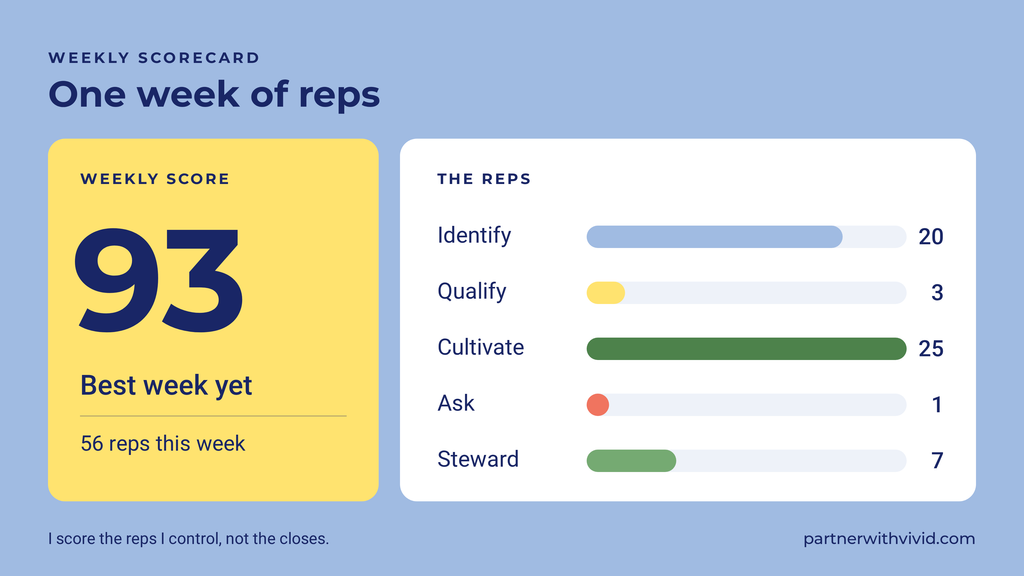
The Friday close also scores my week on things I actually control, like how many people I reached out to and followed up with. It does not score outcomes, because I cannot control those. Last week was my best week yet.
So how is Q4 starting?
Really well. I am ahead of where I hoped to be for the year, and my week has a shape that holds even when I have 17 meetings in it. I am not the router between my own tools anymore. And the book I keep talking about finally has a start date.
Try it for your own quarter.
You do not need my whole setup. Open Claude, upload your plan, and ask yourself the client questions. Look at your year one month at a time. Pick three words for how you want the quarter to feel. Write down what you already decided so you can quit deciding it. Then pick one thing you do every single week and make it a skill.
I also have a new tool on the griddle for the planning part. It is called Plan Your Year, and it is for consultants and the folks who serve our sector. You walk through nine steps and it hands you back two pages in your own colors, one year with the next quarter spelled out, so you can run it again every quarter. It is not quite ready. When it is, it will be free on the tools page and you will hear it here first.
In the meantime, start with the skills. The Skill Builder is free, and it helps you write a set of Claude skills that all play by the same rules, so you only have to explain it once.
Erin Peshoff is the Founder of Vivid Operational Advisors. She has spent thirty years inside nonprofit operations, helped raise over $100 million for institutional missions, and built Vivid around the operating discipline most strategic engagements skip.