
The Editor-Architect Framework
After almost three decades in the nonprofit sector, we learned that less is often just what an organization needs.
That idea sits under everything we do. We call it the Editor-Architect Framework. It is how we look at an operation before we touch it, and it is why our first move is almost always to take something out.
Operations is a big Word.
When people ask what we do, the short answer is operations. That word covers so much ground it tells you almost nothing.
So we mapped it out. Nine systems in three groups. Most people read the list once and already know which one has been giving them trouble.
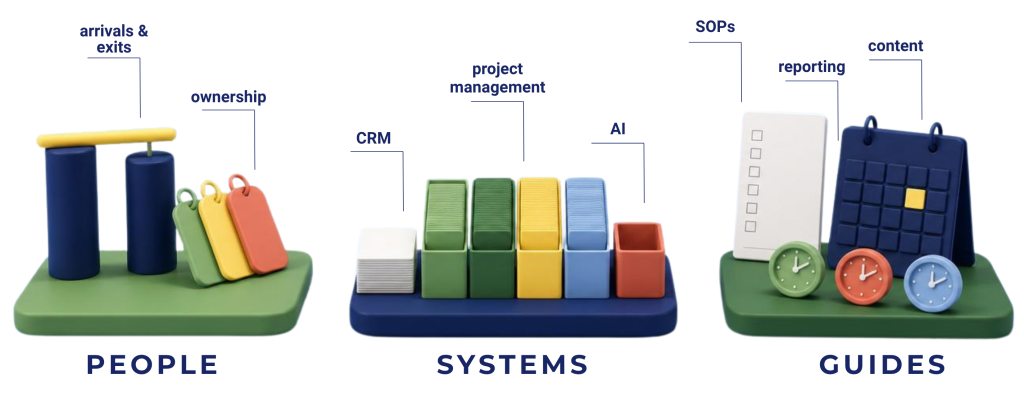
PEOPLE OWN THE WORK.
These are the systems for who joins, who leaves and who decides.
- Arrivals. How a new person learns the job, so their first weeks look the same no matter who runs them.
- Exits. How the work stays put when someone leaves, so the donor still hears from you after a seat changes hands.
- Ownership. Who owns what, so the organization stops running through one person.
Systems run the work.
These hold and move the actual work.
- CRM. A donor database your team trusts, with no year-end surprise about who quietly stopped giving.
- Project Management. One place the work lives, so you hear about a problem before someone has to confess it.
- AI Workflows. A plan for AI, so a machine carries the repeatable work and your people carry the relationships.
Guides Document the work.
These make the work easy to repeat and easy to see.
- SOPs. The answer to how something gets done is a document instead of a person’s name.
- Reporting. The numbers show up before the board asks for them.
- Content Planning. A calendar for what you say to donors and when, tied to your fundraising year.
THE FOUR Moves.
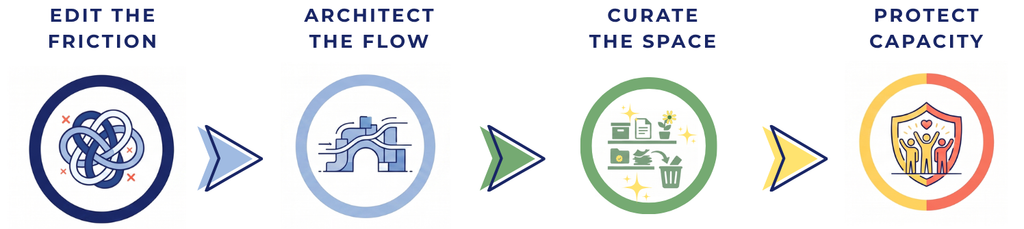
- Edit the Friction. Find what is slowing the work down and take it out before doing anything else.
- Architect the Flow. Build around the way your team works today.
- Curate the Space. Keep what belongs. Clear out what piled up over the years and no longer helps.
- Protect Capacity. Build systems that look after the people running them as well as the organization that depends on them.
Why We Edit First.
Almost every operations project in our sector starts at the second move. Building looks like progress and cutting looks like nothing happened. So the new database goes in on top of the old mess, the mess moves in with it, and eighteen months later somebody decides the database never worked.
We start the way you clean out a junk drawer. All the cords come out on the counter first. Then we decide what goes back in.
You can build a system on top of a mess and it will still look finished. So when we look at a system, we ask whether it works and what was still underneath it when it went in. A system built over the mess sits at the first stage, no matter how new it looks.
We edit first because we spent years in the fundraiser’s chair watching it go the other way. Fundraising paid for it every time.
Where the framework shows up.
Every engagement runs on these four moves across these nine systems. On the 1st of each month our clients get their Map, one page that shows what came off their plate and what is next.
Where to start.
Want to see where your own systems stand? Before the Edit asks one question for each of the nine systems and shows you what to take on first. It takes about five minutes.
If you already know which system is costing you the most, twenty minutes is enough to name what to take on first.
Erin Peshoff is the Founder of Vivid Operational Advisors. She has spent thirty years inside nonprofit operations, helped raise over $100 million for institutional missions, and built Vivid around the operating discipline most strategic engagements skip.