


When the board has what they need
For years I walked into board meetings braced and overly prepared for whatever they could throw at me. Not because the news was bad, but because I did not fully trust what I was carrying and I couldn’t validate it without manual manipulation.
I had numbers that our system admin had produced, but I could not always tell you where they came from, or whether the same question next quarter would give me the same answer.
So I over-explained and got frustrated with board members who asked questions I couldn’t answer. And it felt like I spent the hour a half step behind the room.
Then I got my hands on reporting I actually believed.
Let me start by saying that the solution was not a better, fancier dashboard. The solution was that I knew what every number on the page meant, where it came from, what I would say when somebody pulled the thread, because I had already pulled it myself. Same board, same organization, completely different hour.
I stopped defending and I told them what the data said so we could have a conversation about a pipeline that was thin in the middle, here is what that costs us in eighteen months, here is what I want to do about it.
What I did not expect was what it did to them. Board members who had been polite got specific. They repeated things I said, accurately, in rooms I was not in. One of them called me weeks later about a name he had been sitting on for a year. People do not go dig through their own contacts for you when they are unsure whether to trust the picture you handed them.
Fall is when this gets decided. Everyone comes back, the calendar fills, and the report you bring to that first meeting sets the temperature for the giving season.
What has to be working for that hour to go that way
Reporting that runs the same way every time. Not just the same template, but the same definitions and date ranges. Clarity around rules is also critical – think about what counts as a new donor, a recurring donor, a lapsed donor. Make your list and stick to it. A number that quietly shifts meaning between spring and fall is a number nobody can carry anywhere.
The report is the easy part. Knowing how many of those gifts traced back to the spring event is the part that buys you the room. It’s also critical to have one person own a record so that you don’t end up with reports rebuilt from scratch. Ownership keeps the story steady across quarters and across turnover.
How to get there before your first meeting
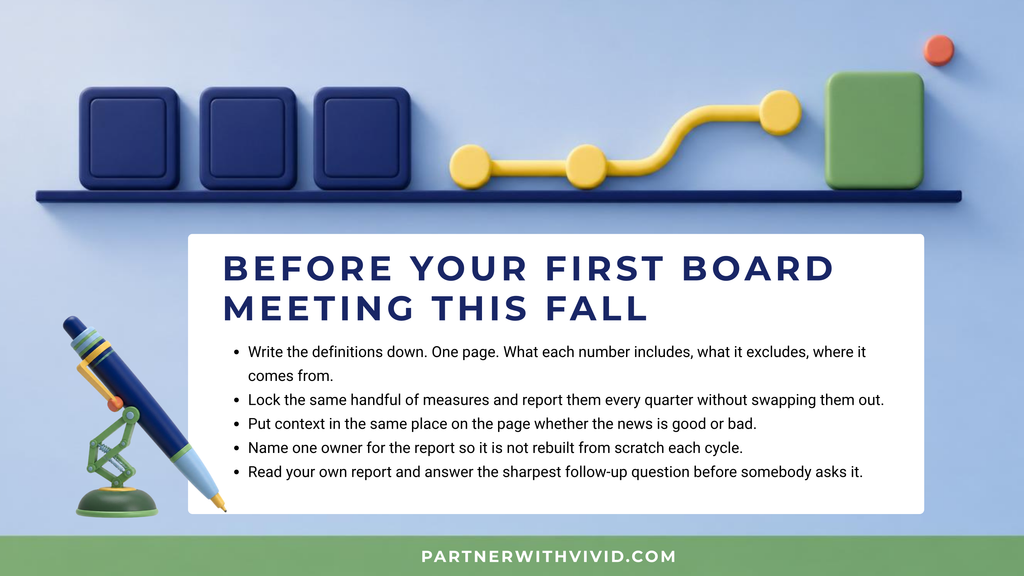
As a team, write the definitions down and define what each number includes, excludes, and where it comes from. Make sure you are aligned and every objection is managed. Then stop relitigating it every quarter. Report the same handful of measures every time and put context in the same place whether the news is good or bad.. Boards build conviction through repetition.
Read your own report and ask what the sharpest person in that room will want next. Bring it with you.
What it feels like on the other side
Steady. Just steady. The week before the meeting stays calm because you are shaping the story rather than assembling it. You walk in able to say the true thing, hard part included, because the record behind you does not wobble. And the board stops watching you work and starts working with you. That shift is worth more than any single number you will report this fall.
If you want that meeting to feel different this year, start with the reporting.
Erin Peshoff is the Founder of Vivid Operational Advisors. She has spent thirty years inside nonprofit operations, helped raise over $100 million for institutional missions, and built Vivid around the operating discipline most strategic engagements skip.