


Reporting Should not feel Like Archeology
A board member asks a simple question in a quarterly meeting. How is the fall appeal doing compared to last year. The room goes quiet for a beat too long, because nobody actually knows, not with certainty, not without someone going back into the CRM and rebuilding the number by hand after the meeting ends. The gift officer sitting closest to the campaign gets the look that says this should have been ready, and takes the blame for a trend nobody could actually see coming, because the system never surfaced it in time for anyone to act.
This is what reporting looks like in most organizations that have not yet built the infrastructure underneath their fundraising. Every report is a custom dig. Metrics get defined in the moment someone asks for them, not before, so two different people asked the same question in two different months get two different answers built two different ways. The goals that got set with real intention in January have not actually been looked at since, not because anyone stopped caring, but because nothing in the system was built to bring them back up again.
Reporting that works does the opposite. It defines the metrics that matter by function, ahead of time, with a clear owner and a cadence that gets followed whether or not a board meeting is coming up. The vanity numbers that nobody ever really acted on get retired, on purpose, before the dashboard gets built, not after. What remains is a small number of reports that actually drive a decision when they change, and nothing that runs simply because it has always run.
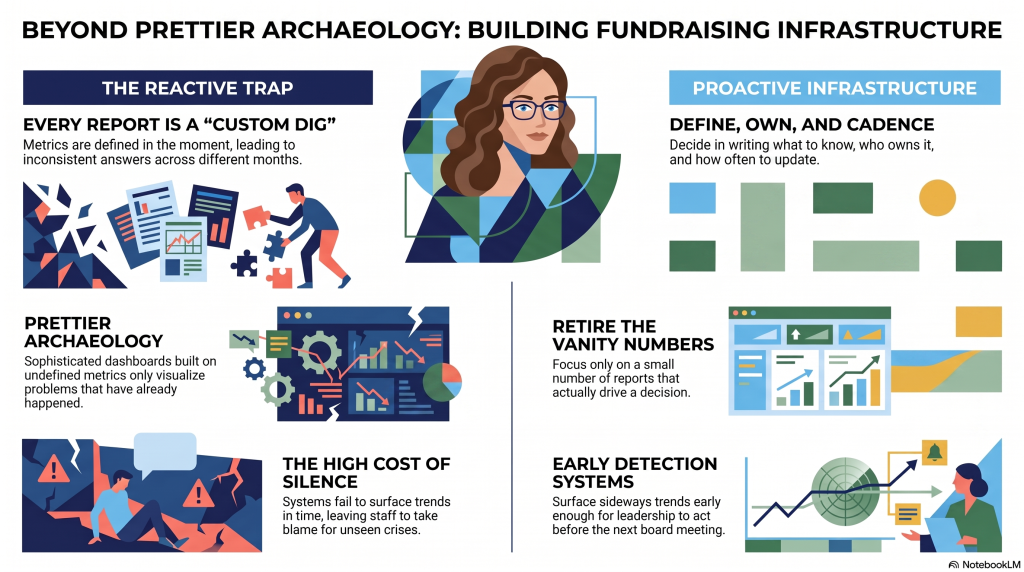
The difference this makes is not cosmetic. When reporting works the way it should, a trend that is starting to go sideways surfaces early enough that someone can actually do something about it, weeks before it becomes the uncomfortable conversation in a board meeting. The gift officer stops absorbing blame for a problem the system should have flagged first. Leadership stops discovering the lapsed donor list as a surprise at year end, because the system was already showing them the pattern months earlier, quietly, before it became a crisis.
This is not a technology problem, even though it often gets treated like one. A more sophisticated dashboard built on top of undefined metrics just produces prettier archaeology. The actual fix starts earlier than the dashboard. It starts with deciding, in writing, what the organization actually needs to know, who owns knowing it, and how often the answer needs to be current. Only after that decision is made does the reporting tool matter at all.
If your organization’s answer to how things are going currently depends on someone rebuilding a spreadsheet after the question gets asked, that is worth a closer look before the next board meeting, not after it.
See where your reporting and eight other systems currently stand. The self-placement mirror on the Editor-Architect page takes about the length of a coffee break.
Erin Peshoff is the Founder of Vivid Operational Advisors. She has spent thirty years inside nonprofit operations, helped raise over $100 million for institutional missions, and built Vivid around the operating discipline most strategic engagements skip.