

Working OK is not the Same as Flourishing
A firm’s ops lead sends the same monthly update every time. Stable. Deliverables on track. Nothing to report.
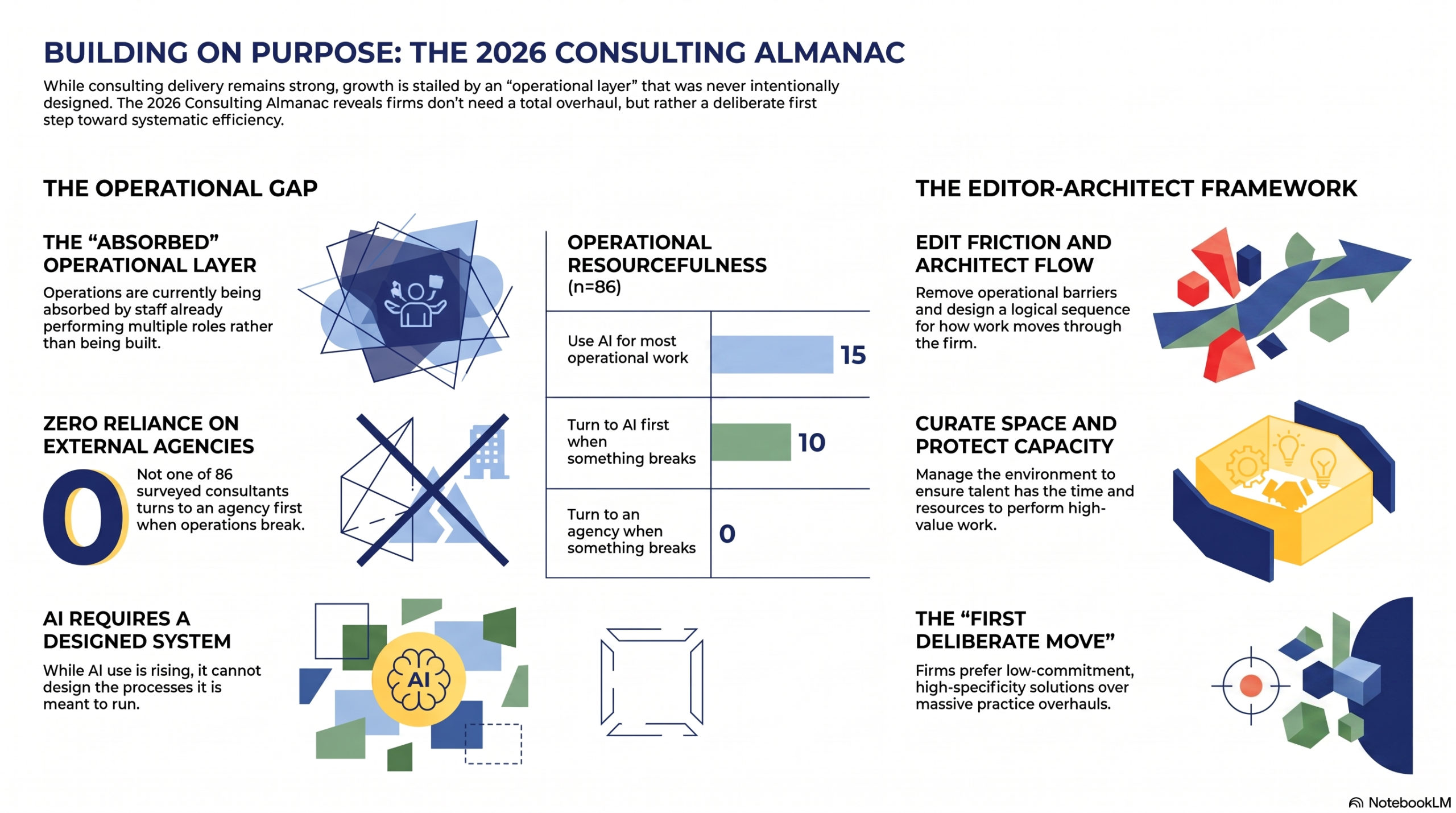
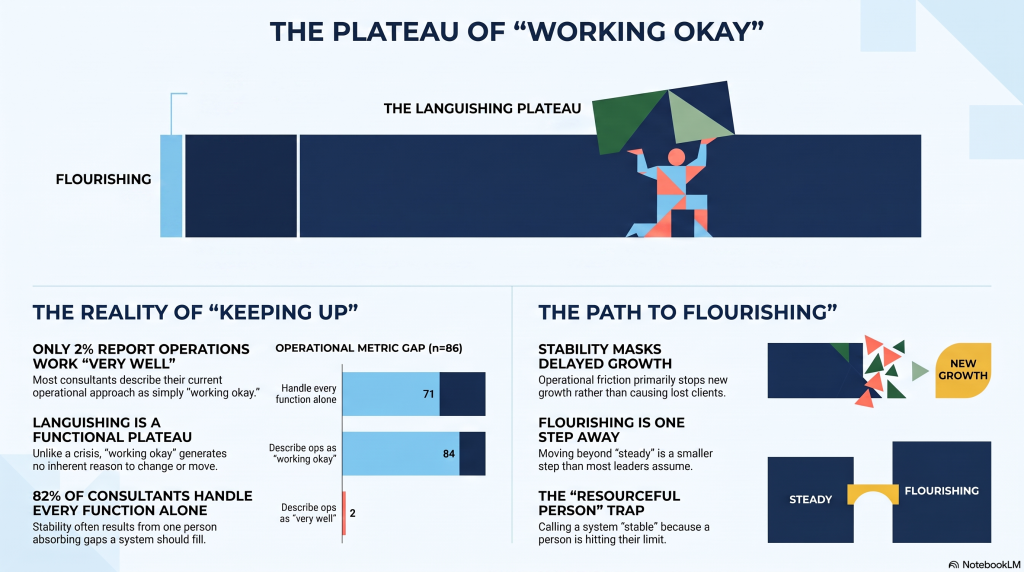
That update sounds like good news, and in a real sense it is. Vivid surveyed 86 independent consultants this spring for the 2026 Consulting Almanac, and the most common answer to how they would describe their operations was keeping up. The most common answer to how well their current approach was working was working okay. Only two of the 86 said their operations were working very well.
If your firm’s own operational updates read the same way, we are keeping up and things are working okay, it is worth sitting with what that phrase is actually reporting.
The psychologist Corey Keyes has a name for the space between distress and flourishing: languishing. It is not failure. It is functional, and quietly stuck. Nothing is on fire, and nothing is moving either. The almanac’s numbers describe an operational version of the same thing. A system that fails outright produces a crisis, and a crisis produces change. A system that works okay produces a plateau that can hold for years, because it never generates a reason to move.
That plateau is not a flaw in the person running it. In the same survey, 71 of 86 consultants said they handle every operational function themselves, selling, delivering, managing the calendar, chasing invoices, keeping the records, and still holding onto nearly every client relationship. That is not a system failing. That is one person quietly running five jobs and calling it stable, because stable is what happens when a resourceful person absorbs the gaps a system was supposed to fill.
The same pattern shows up on the client side. If your firm depends on an embedded ops leader, a fractional hire, or a consulting partner to hold the operational layer, working okay from that person is worth a second question. Not because it is untrue. Because working okay is the report you get right before the plateau sets in for good, and right before someone quietly hits their limit.
The almanac found something encouraging alongside the plateau. The friction these consultants describe mostly shows up as delayed growth, not lost clients or missed deadlines. The delivery core holds. What gets lost is not the work in front of them. It is the growth sitting just past it, unclaimed, because nobody built the layer that would let it happen without also breaking the person carrying it.
Languishing is closer to flourishing than distress is. That is the useful part of naming it. A steady operation is not a broken one. It is one deliberate step away from something better than steady, and the step is smaller than most leaders assume, because the foundation underneath it is already sound.
The next post in this series looks at what that plateau actually costs, and why the cost shows up as burnout hiding inside numbers that look fine on the surface.
Read the full findings in The 2026 Consulting Almanac, Vivid’s research report on how independent consulting practices actually run.
Erin Peshoff is the Founder of Vivid Operational Advisors. She has spent thirty years inside nonprofit operations, helped raise over $100 million for institutional missions, and built Vivid around the operating discipline most strategic engagements skip.